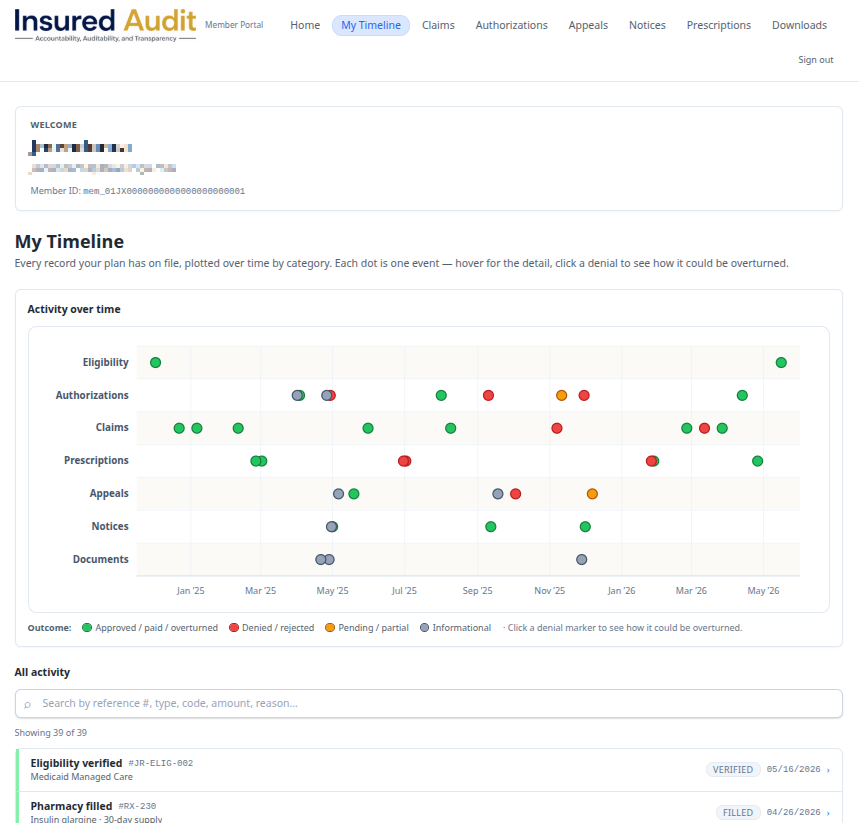
A healthcare story should read like a story.
Meet Maria. This is a fictional demonstration, from her first orthopedic visit to the final payment, shown the way InsuredAudit presents it.
Maria visits an orthopedic specialist.
Ongoing knee pain brings her to Meridian Orthopedics on January 3.
The provider orders an MRI.
The specialist requests imaging to evaluate the joint.
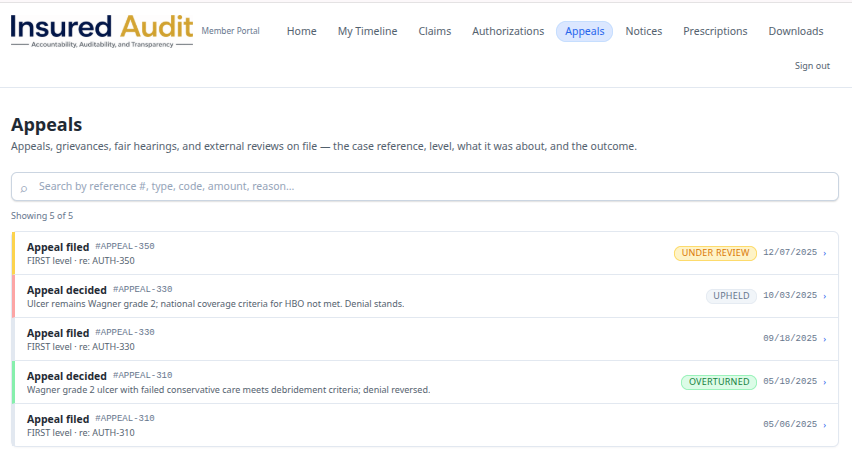
The health plan receives an authorization request.
Meridian Health Plan logs the request on January 10.
Additional records are requested.
The plan asks for supporting therapy notes before it will decide.
The provider uploads therapy notes.
Meridian Orthopedics submits the requested documentation on January 24.
The authorization is approved.
Approval is issued January 29, valid for 90 days.
The MRI is performed.
Maria completes the imaging in early February.
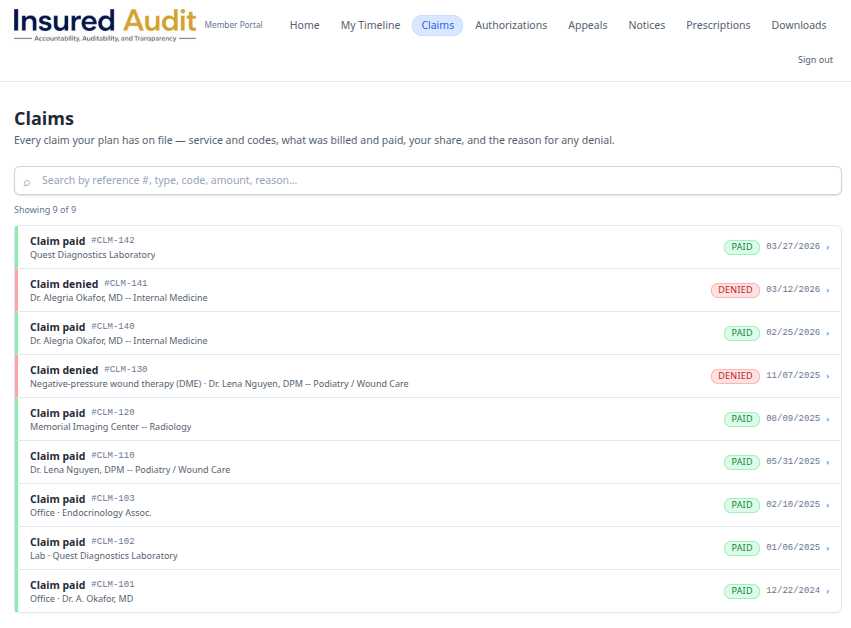
The claim is submitted.
Meridian Orthopedics bills $4,200 for the procedure on February 12.
The health plan pays the provider.
$1,340 is paid against an allowed amount of $1,550 on February 26.
Maria's deductible is updated.
Her plan-year accumulators reflect the new claim the same day.
Maria receives an explanation.
A plain-language summary of what was billed, allowed, and paid is ready in her timeline.
Maria asks AVA why she owes a balance.
She isn't sure why $210 is still her responsibility.
AVA explains the allowed amount, payment, and responsibility.
The coinsurance under her plan accounts for the remaining $210, cited against the claim record.
Every item links back to the supporting record.
The visit, the authorization, the claim, the payment, and the explanation all trace to the same evidence.
Without InsuredAudit, Maria sees disconnected portals, letters, and bills. With InsuredAudit, she sees the sequence.